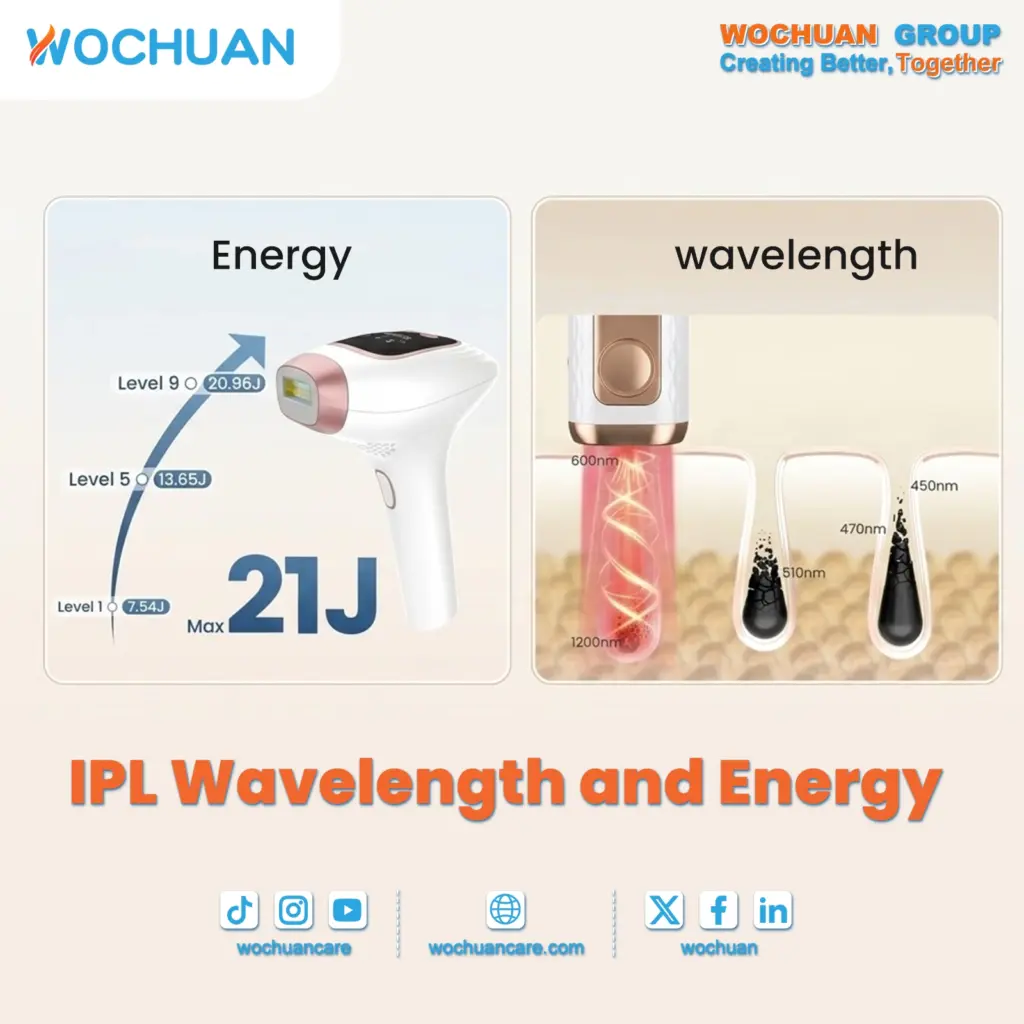


As summer approaches, many people start looking for hair removal devices to keep their skin smooth and comfortable. When checking product specifications, two terms often appear: wavelength and energy.
These parameters can sound technical, and many users wonder:
Is a longer wavelength always better?
Does higher energy mean stronger hair removal?
In reality, hair removal performance is not determined by a single number. It depends on how the entire optical system is designed and balanced.
What Is Wavelength?
Wavelength is usually measured in nanometers (Nuevo Méjico). In light-based hair removal, wavelength mainly affects two things: how deeply the light penetrates the skin and how efficiently the pigment in hair absorbs the light.
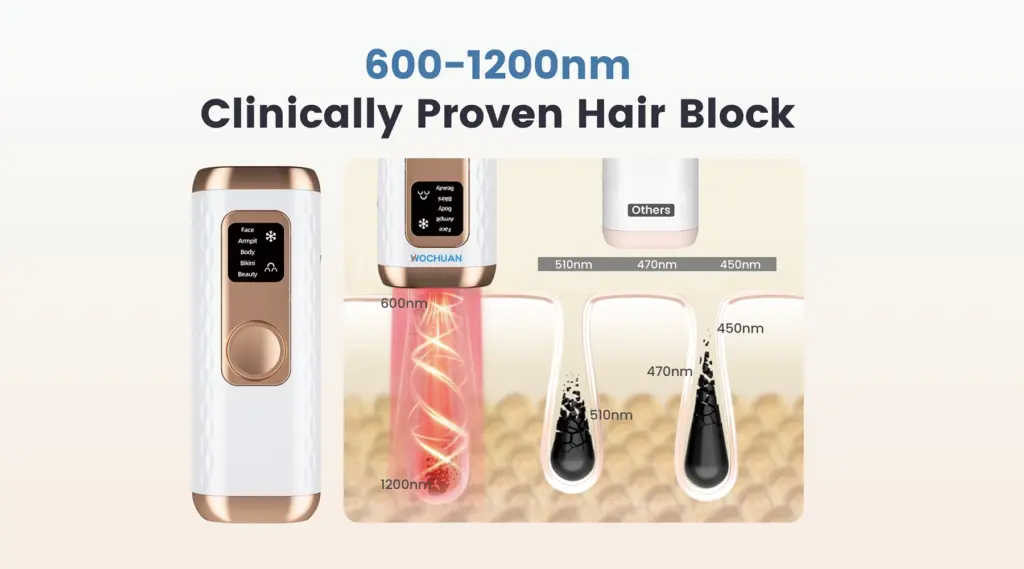
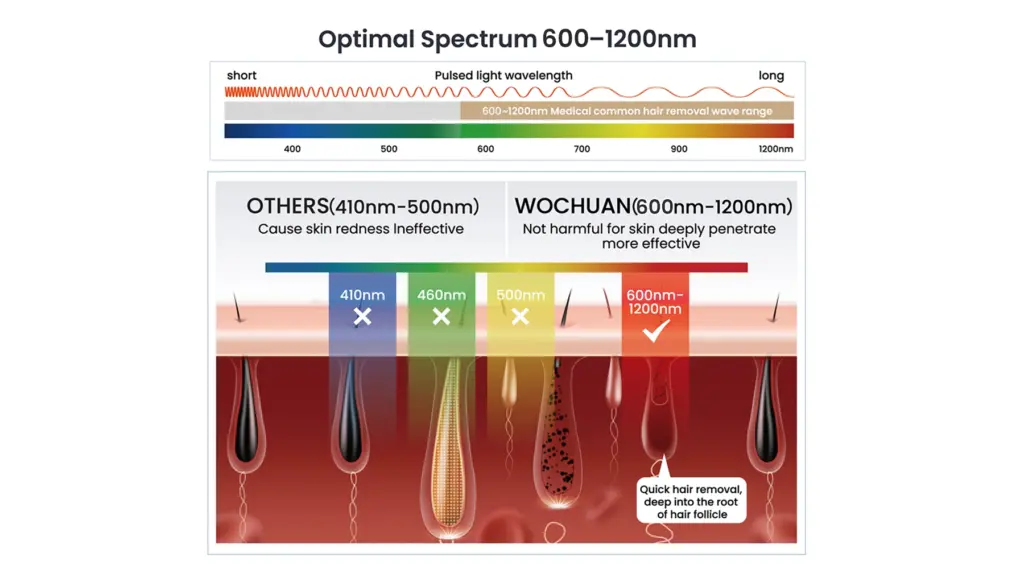
Por ejemplo, IPL (Luz pulsada intensa) devices commonly cover a wavelength range of about 600–1200 nm.
In general:
Shorter wavelengths are absorbed more strongly by melanin but do not penetrate as deeply.
Longer wavelengths can reach deeper layers of the skin and are usually more suitable for darker skin tones.
Because of this, a higher wavelength is not automatically better. What matters most is whether the wavelength range matches the target hair type and skin tone.
What Is Energy (Fluence)?
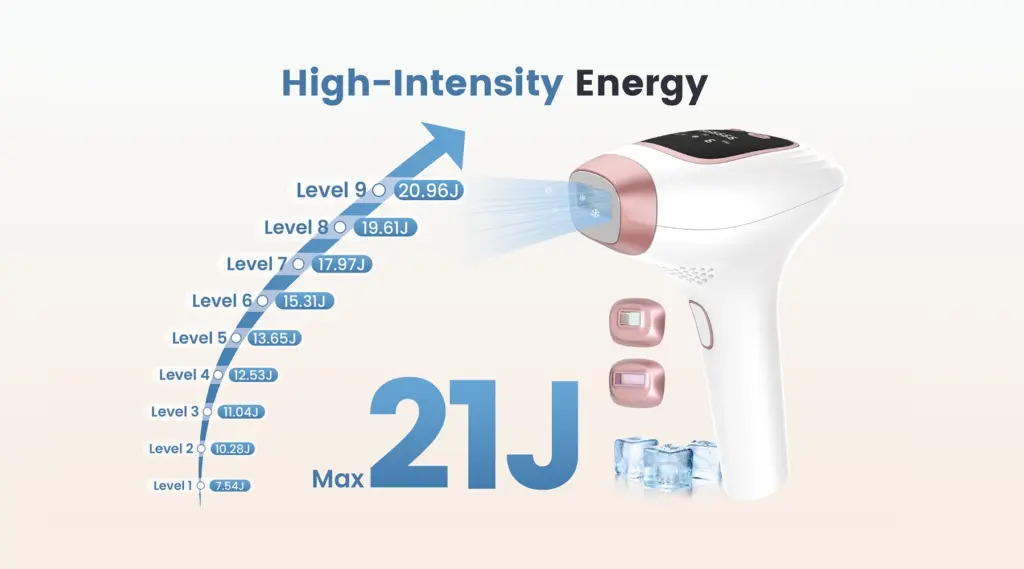
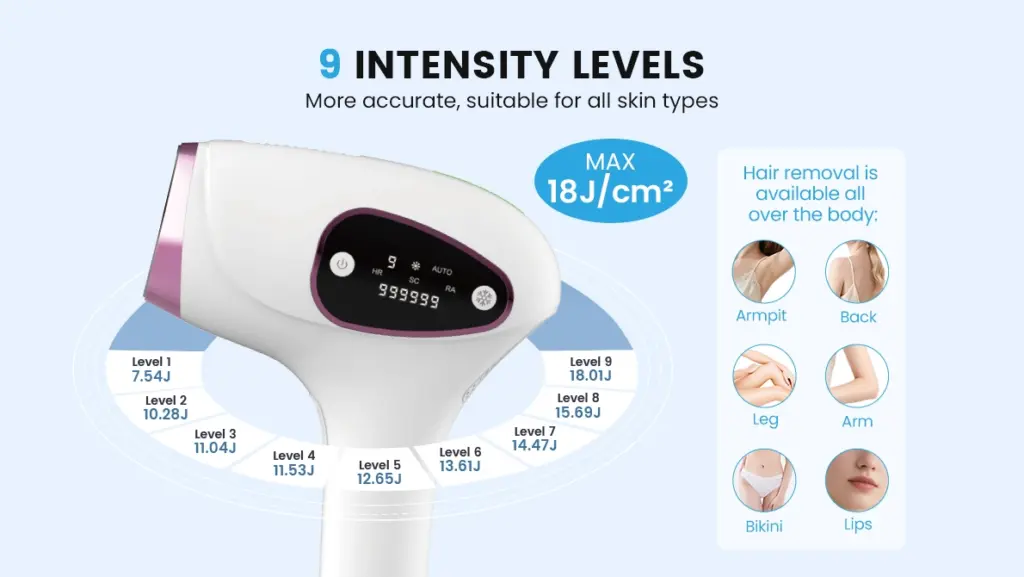
Energy is usually measured in J/cm², also called energy density. It represents how much light energy is delivered to a specific area of skin.
You can think of it this way:
If the energy is too low, the hair follicle may not receive enough stimulation, and results may appear slowly.
If the energy is too high, the treatment may feel less comfortable.
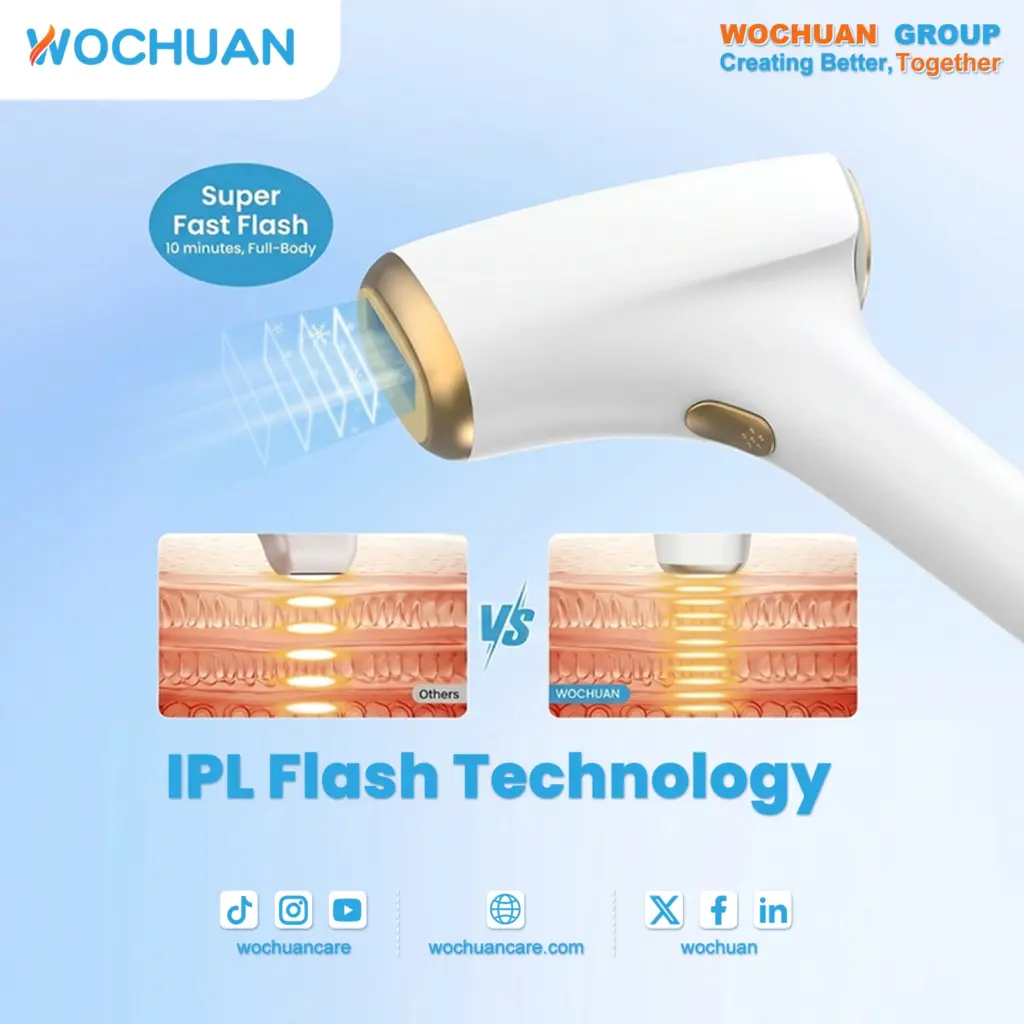
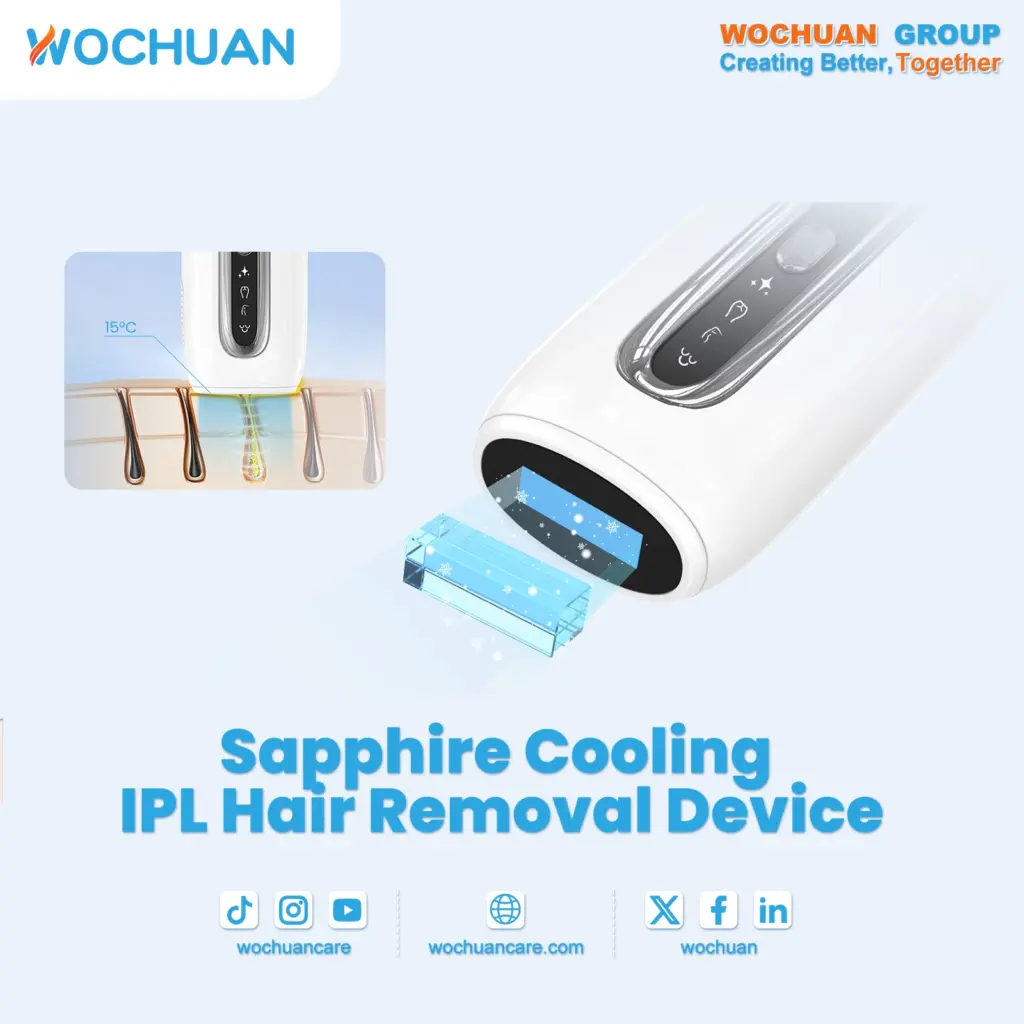
Sin embargo, hair removal effectiveness is not only about high energy levels. Several factors work together, including stable energy output, proper wavelength range, well-designed pulse duration, and effective cooling or heat management.
A well-designed device balances performance, seguridad, and user comfort.
Why These Parameters Are Often Misunderstood
In marketing materials, it is common to see claims such as “higher energy means better results” or “more wavelengths means better technology.” While these statements may sound convincing, they do not explain the full picture.
Hair removal performance depends on the overall optical structure and energy control system, not just one specification.
Por ejemplo, a device may use a long wavelength, but if the energy is too low, it may not effectively impact the hair follicle.
On the other hand, if a device offers very high energy but users feel discomfort, they may lower the setting, which can also affect the final result.
This is why understanding how wavelength and energy work together is more important than simply comparing numbers.
Pensamientos finales
When choosing a hair removal device, do not focus only on the size of the numbers.
Instead, consider whether the wavelength range covers common hair removal needs, whether the energy level can be adjusted, and whether the design supports different skin tones and hair types.
For brands and distributors, it is also important to select products that match the characteristics of the target market.
In a well-designed hair removal device, parameters are only the foundation. The overall system design and real user suitability are what truly matter.