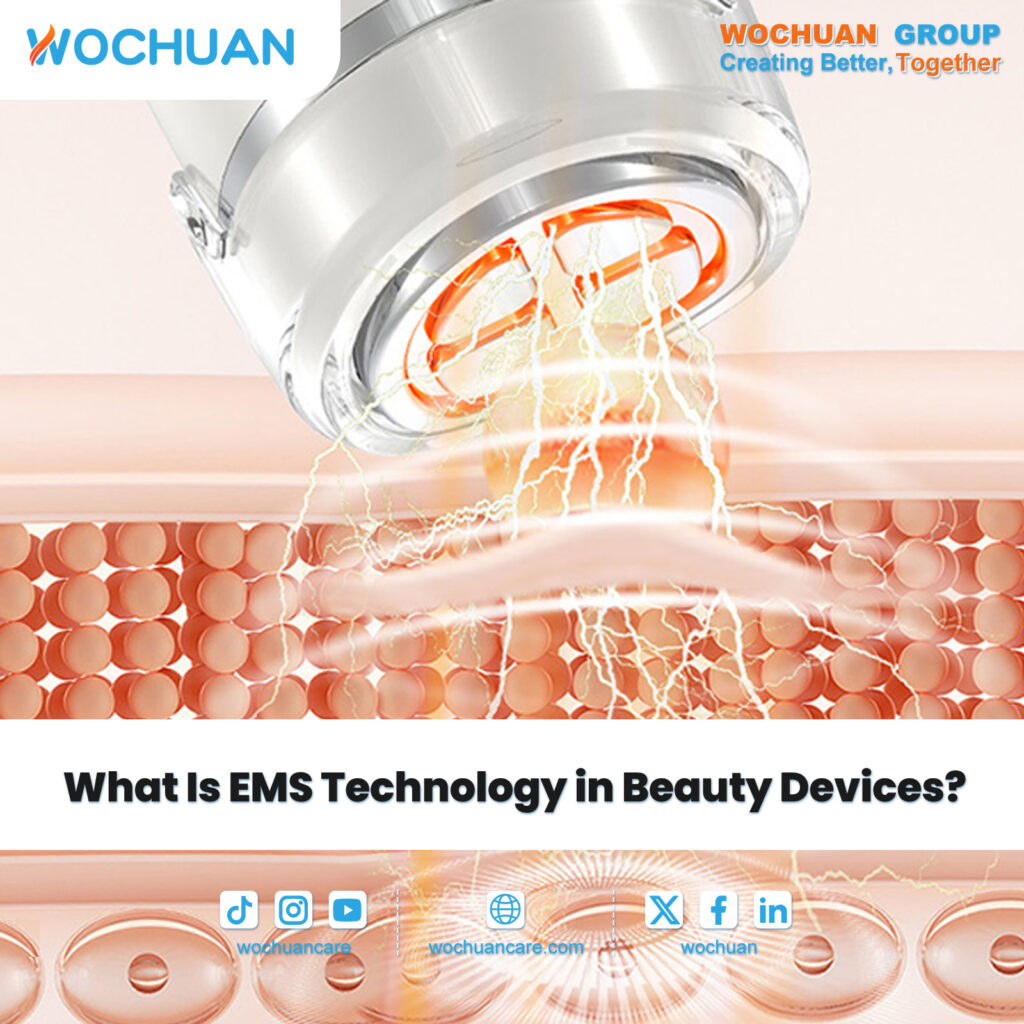


Auf dem heutigen Schönheits- und Körperpflegemarkt, Verbraucher erwarten mehr als nur einen einfachen Haartrockner. Hochgeschwindigkeits-Luftstrom, Negative Ionentechnologie, intelligente Temperaturregelung, leichte Ergonomie, und Leistung auf Salonniveau sind zu Standarderwartungen geworden.
Für Beauty-Marken, Einzelhändler, Importeure, und E-Commerce-Verkäufer, Den richtigen OEM/ODM-Haartrocknerhersteller zu finden, ist heute eine der wichtigsten Geschäftsentscheidungen.
Jedoch, Viele Käufer kämpfen immer noch mit Fragen wie::
- Was genau ist der OEM/ODM-Herstellungsprozess??
- Wie lange dauert die Produktentwicklung??
- Wie kann ich Qualität und Zertifizierungen sicherstellen??
- Was sollte ich vor der Massenproduktion mit der Fabrik kommunizieren??
- Wie wähle ich einen zuverlässigen Hersteller anstelle eines Handelsvermittlers??
Dieser Leitfaden erklärt den gesamten Prozess – von der Konzeptentwicklung bis zum weltweiten Versand – und hilft Käufern dabei, häufige Beschaffungsfehler zu vermeiden und eine reibungslosere Zusammenarbeit mit den Fabriken aufzubauen.
1. Was ist OEM? & ODM-Fertigung?
Viele Käufer verwechseln OEM- und ODM-Fertigung, aber die beiden Modelle sind tatsächlich sehr unterschiedlich.
OEM (Herstellung von Erstausrüstung)
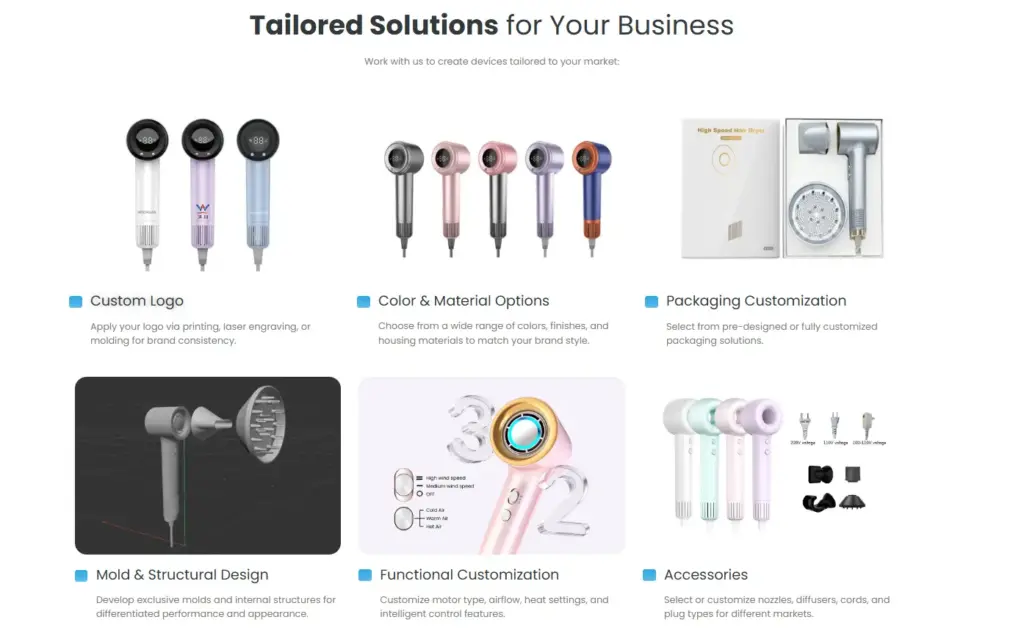
OEM bezieht sich auf Fertigungsdienstleistungen, bei denen die Fabrik Produkte streng nach dem vollständigen Design des Käufers herstellt, technische Spezifikationen, Produktkonzept und Markenanforderungen.
In OEM-Projekten:
- Der Käufer ist Eigentümer des vollständigen Produktdesigns, geistiges Eigentum und Markenlayout
- Das Werk ist lediglich für die technische Umsetzung verantwortlich, Massenproduktion und Fertigung
Perfekt für Marken mit unabhängigem R&D-Fähigkeit und langfristige Markenpositionierung
ODM (Original-Design-Herstellung)
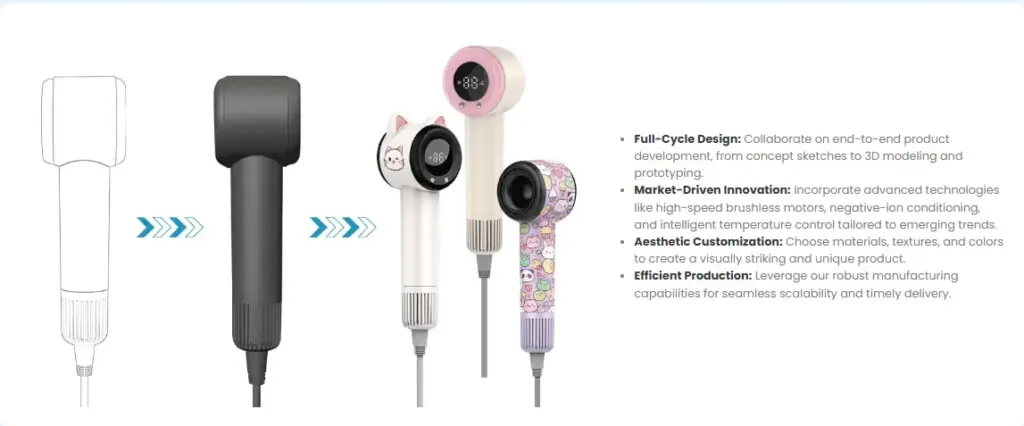
ODM bedeutet, dass die Fabrik über selbst entwickelte, ausgereifte Produktdesigns verfügt, Strukturlösungen und Standardproduktplattformen. Käufer wählen vorgefertigte Modelle aus und führen individuelle Anpassungen auf der Grundlage vorhandener ausgereifter Lösungen durch.
In ODM-Projekten:
Die Fabrik ist Eigentümer des Produktdesigns und der technischen Kernlösung
Käufer nutzen ausgereifte Standardplattformen, um R zu sparen&D-Zyklus
Unser professionelles technisches Team kann eine tiefgreifende ODM-Optimierung und teilweise Funktionsanpassung unterstützen, einschließlich:
- Abstimmung der Luftstromgeschwindigkeit
- Optimierung des Heizungssystems
- Konfiguration der Negativ-Ionen-Technologie
- Lärmreduzierung & Leistungsoptimierung
2. Kompletter Haartrockner-Herstellungsprozess
Zur professionellen Herstellung von Haartrocknern gehört weit mehr als nur die einfache Montage. Es erfordert Ingenieurskunst, Einhaltung der Sicherheitsvorschriften, Präzisionsfertigung, und strenges Qualitätsmanagement.
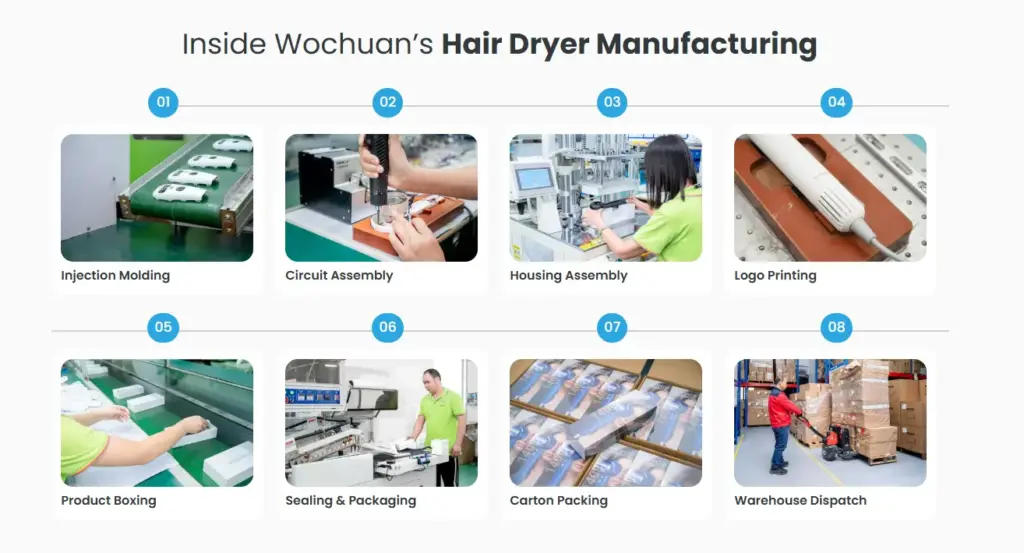
Nachfolgend finden Sie den gesamten Prozess vom Konzept bis zum Versand.
Schritt 1: Produktplanung & Marktpositionierung
Bevor die Entwicklung beginnt, Käufer und Hersteller definieren:
· Zielmarkt
· Preispositionierung
· Verbraucherpräferenzen
· Produktleistungsziele
· Konkurrenzanalyse
· Erforderliche Zertifizierungen
Schritt 2: Industriedesign & Maschinenbau
Sobald die Anforderungen bestätigt sind, Der Engineering-Prozess beginnt.
Kernentwicklungsbereiche
| Ingenieurbereich | Fokus |
| Industriedesign | Aussehen & Ergonomie |
| Bauingenieurwesen | Interne Luftstromstruktur |
| Elektrotechnik | Heizung & Steuerungssysteme |
| Wärmemanagement | Temperaturstabilität |
| Geräuschreduzierung | Benutzerkomfort |
| Sicherheitsdesign | Überhitzungsschutz |
Moderne Hochgeschwindigkeits-Haartrockner können enthalten:
- Bürstenlose BLDC-Motoren
- Intelligente Wärmesteuerung
- Generatoren für negative Ionen
- Magnetische Düsen
- Temperatursensoren
- Leichte Motorsysteme
Schritt 3: Prototypenentwicklung
Fabriken erstellen Prototypen zur Evaluierung und zum Testen.
Prototypentests umfassen normalerweise:
· Luftstromleistung
· Temperaturkonsistenz
· Geräuschpegel
· Gewichtsbalance
· Griffkomfort
· Kabelflexibilität
· Fallschutz
Diese Phase ist äußerst wichtig, da Änderungen nach der Werkzeugbereitstellung viel teurer sind.
Schritt 4: Schimmelentwicklung
Nach Musterfreigabe, Der Werkzeugbau beginnt.
Gängige Schimmelpilzarten
| Formtyp | Funktion |
| Kunststoff-Spritzgussform | Außengehäuse |
| Metallprägeform | Interne Komponenten |
| Silikonform | Schutzteile |
Die Schimmelqualität wirkt sich direkt aus:
- Produktpräzision
- Oberflächenbeschaffenheit
- Montagestabilität
- Produktlebensdauer
Schritt 5: Rohstoff & Komponentenbeschaffung
Zuverlässige Hersteller bauen stabile Lieferketten für kritische Komponenten auf.
Kernkomponenten des Haartrockners
| Komponente | Bedeutung |
| Motor | Luftstrom & Haltbarkeit |
| Heizkörper | Stabile Temperatur |
| Leiterplatte | Intelligente Steuerung |
| Lüfterflügel | Windeffizienz |
| Ionengenerator | Haarpflegeleistung |
| Netzkabel | Einhaltung der Sicherheitsvorschriften |
Professionelle Fabriken implementieren normalerweise:
- Wareneingangskontrolle
- Lieferantenqualifikationsmanagement
- Chargenrückverfolgbarkeit
- Qualitätsaudits
Schritt 6: Massenproduktionsmontage
Moderne Haartrocknerfabriken kombinieren Automatisierung mit manueller Inspektion.
Typischer Produktionsablauf
1. Wareneingangskontrolle
2. Leiterplattenbestückung
3. Installation der Heizungsanlage
4. Motormontage
5. Gehäusemontage
6. Funktionstest
7. Alterungstest
8. Endkontrolle
9. Verpackung
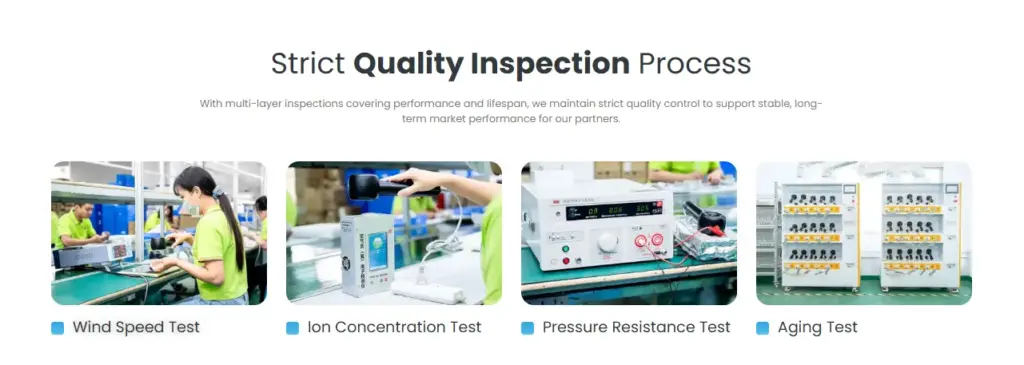
Schritt 7: Zuverlässigkeitstests & Alterungstests
Vor dem Versand, Produkte werden strengen Zuverlässigkeitstests unterzogen.
Allgemeine Zuverlässigkeitstests
| Testgegenstand | Objektiv |
| Alterungstest | Bewertet die langfristige Motorlebensdauer und Betriebsstabilität. |
| Anionendichtetest | Validiert Konzentrationsniveaus für die Haargesundheitsleistung. |
| Drucktest | Überprüft die Haltbarkeit und strukturelle Integrität des Gehäuses. |
| Thermocycling | Bewertet die Komponentenzuverlässigkeit unter extremen Temperaturen. |
| Akustischer Test | Optimiert Schalldruckpegel und Klangqualität. |
| Wärmeschutz | Gewährleistet eine ausfallsichere Abschaltung bei ungewöhnlichem Hitzestau. |
Viele professionelle Fabriken führen Leistungen durch 100% Funktionsprüfung vor dem Versand.
Schritt 8: Verpackung & Lieferung
Bei der Verpackung geht es nicht nur um das Aussehen – sie schützt Produkte auch während des Logistiktransports.
Hersteller unterstützen oft:
· Einzelhandelsverpackung
· E-Commerce-Verpackung
· Geschenkbox-Design
· Barcode-Etiketten
· Mehrsprachige Handbücher
· Kartonoptimierung
3. Typischer Zeitplan für die Zusammenarbeit
Die Entwicklungszeitpläne variieren je nach OEM- oder ODM-Projekt.
Typische Timeline-Übersicht
| Bühne | Geschätzte Zeit |
| Anforderungsdiskussion | 3–7 Tage |
| Produktvorschlag | 5–10 Tage |
| Musterentwicklung | 15–30 Tage |
| Schimmelentwicklung | 25–45 Tage |
| Zertifizierungsprüfung | 20–60 Tage |
| Probeproduktion | 7–15 Tage |
| Massenproduktion | 30–45 Tage |
4. Qualitätskontrolle & Zertifizierungen
Qualitätsmanagement ist einer der größten Indikatoren für einen professionellen Hersteller.
Standard-Qualitätskontrollprozess
| QC-Stufe | Inspektionsschwerpunkt |
| IQ | Wareneingangskontrolle |
| IPQC | Qualitätskontrolle im Prozess |
| FQC | Endkontrolle des Produkts |
| OCC | Ausgangskontrolle der Sendung |
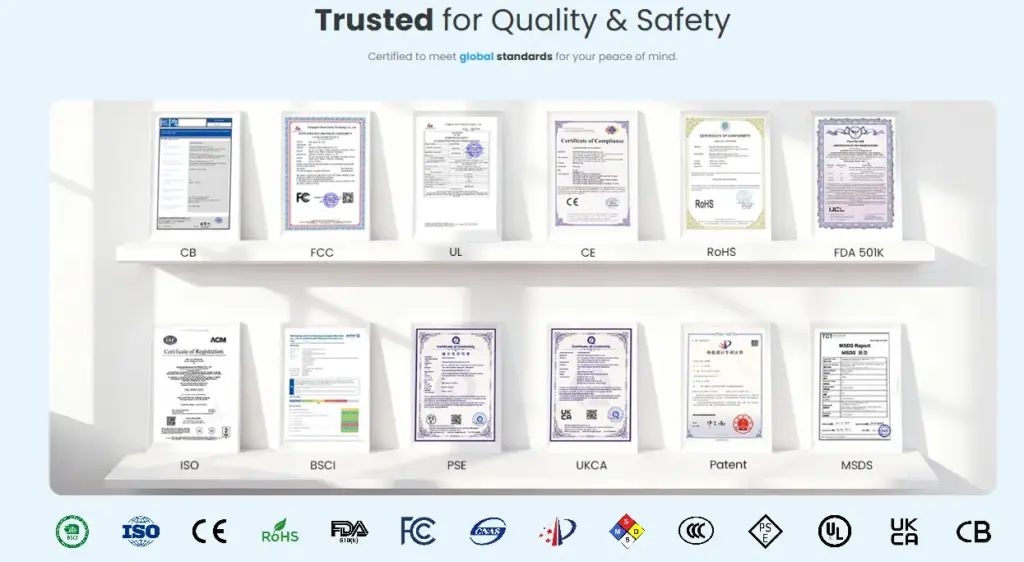
Wichtige internationale Zertifizierungen
| Zertifizierung | Anwendbarer Markt |
| Ce | Europa |
| FCC | Vereinigte Staaten |
| UKCA | Vereinigtes Königreich |
| Rohs | Umweltkonformität |
| ETL / Ul | Nordamerika |
| Pse | Japan |
| WETTER | Australien |
Käufer sollten dies immer überprüfen:
· Gültigkeit der Zertifizierung
· Prüflabore
· Anwendbare Produktmodelle
· Ablaufdaten
5. So wählen Sie den richtigen Haartrockner-Anbieter aus
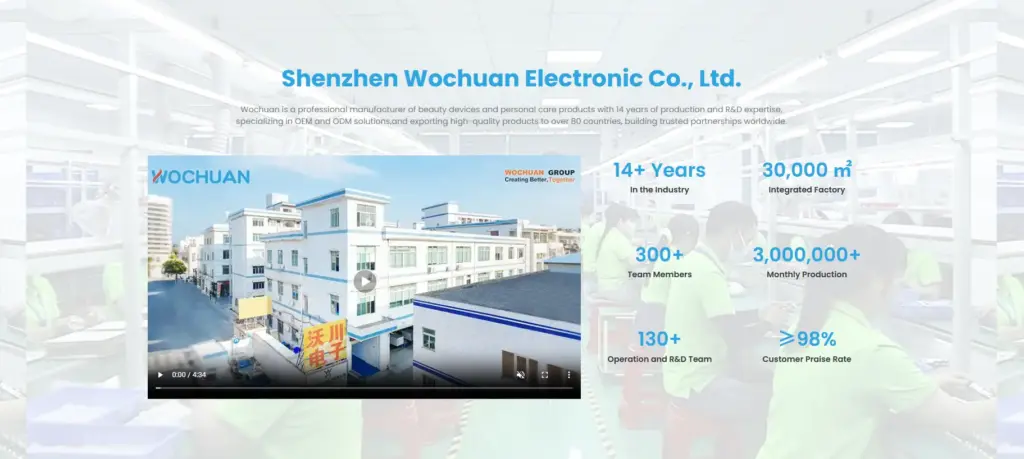
Nicht alle Lieferanten sind echte Hersteller. Bei einigen handelt es sich lediglich um Handelsunternehmen ohne technische oder Produktionskapazitäten.
Die Wahl des richtigen Lieferanten reduziert das langfristige Risiko erheblich.
Checkliste zur Lieferantenbewertung
| Bewertungsbereich | Schlüsselfragen |
| Fertigungserfahrung | Wie viele Jahre in der Produktion? |
| R&D-Fähigkeit | Haben sie Ingenieure?? |
| Produktionskapazität | Monatliche Ausgabefähigkeit? |
| Qualitätssystem | Vollständiger QC-Prozess? |
| Zertifizierungen | Vollständige Exportzertifizierungen? |
| Kommunikation | Schnelle und professionelle Reaktion? |
| OEM/ODM-Fähigkeit | Flexibilität bei der Anpassung? |
| Erfahrung exportieren | Welche Märkte bedienen sie?? |
Warnzeichen für unzuverlässige Lieferanten
· Extrem niedrige Preise
· Langsame Reaktionszeiten
· Unklare Werksinformationen
· Keine Testverfahren
· Unvollständige Zertifizierungen
· Unrealistische Vorlaufzeiten
6. Wichtige Kommunikationspunkte für eine reibungslose Zusammenarbeit
Viele Produktionsverzögerungen passieren, weil Käufer und Fabriken ihre Erwartungen nicht frühzeitig aufeinander abstimmen.
Eine klare Kommunikation ist entscheidend.
Wichtige Details, die vor der Produktion bestätigt werden müssen
| Kategorie | Einzelheiten |
| Produktspezifikationen | Stromspannung, Wattzahl, Luftstrom |
| Verpackung | Kartongröße & Kunstwerk |
| Zubehör | Düsen, Diffusoren, Handbücher |
| Logo-Methode | Laser, Seidendruck, Aufkleber |
| Zertifizierungsanforderungen | Zielmärkte |
| MOQ | Mindestbestellmenge |
| Lieferbedingungen | FOB, EXW, CIF |
| Garantiebestimmungen | Erwartungen nach dem Verkauf |
Best Practices für eine effiziente Zusammenarbeit
1. Bestätigen Sie alles schriftlich
Immer verwenden:
· Produktspezifikationsblätter
· Genehmigte Muster
· Verpackungszeichnungen
· Kaufverträge
2. Erstellen Sie einen klaren Projektzeitplan
Wichtige Meilensteine sollten sein::
· Mustergenehmigung
· Fertigstellung der Form
· Verpackungsbestätigung
· Massenproduktionsplan
· Versanddatum
3. Vermeiden Sie häufige Änderungen während der Produktion
Späte Änderungen können zu Problemen führen:
· Lieferverzögerungen
· Zusätzliche Werkzeugkosten
· Wiederholungsprüfung der Zertifizierung
4. Weisen Sie einen Hauptansprechpartner zu
Ein engagierter Projektmanager verbessert die Kommunikationseffizienz und reduziert Missverständnisse.
7. Häufige Fehler, die Käufer vermeiden sollten
Lieferanten nur anhand des Preises auswählen
Sehr niedrige Preise bedeuten oft:
· Minderwertige Komponenten
· Schwache Qualitätskontrolle
· Instabile Produktion
Zertifizierungsanforderungen ignorieren
Unterschiedliche Märkte erfordern unterschiedliche Compliance-Standards.
Fehlende Zertifizierungen können zu Zollproblemen oder Plattformbeschränkungen führen.
Überspringen von Probentests
Testen Sie immer Muster, bevor Sie die Massenproduktion genehmigen.
Schlechte Verpackungsplanung
Eine schwache Verpackung kann die Transportschadenrate erhöhen.
Keine Backup-Lieferantenstrategie
Erfahrene Einkäufer halten in der Regel alternative Lieferoptionen bereit, um das Risiko in der Lieferkette zu verringern.
8. Letzte Gedanken
Erfolgreiche Haartrocknerprodukte entstehen nicht allein durch die Preisgestaltung. Langfristiger Erfolg hängt von einer zuverlässigen Fertigung ab, Qualitätskontrolle, effiziente Kommunikation, und starke Produktentwicklungsfähigkeit.
Ein professioneller OEM/ODM-Hersteller sollte dafür sorgen:
· Stabile Produktionssysteme
· Starke technische Unterstützung
· Zuverlässige Qualitätskontrolle
· Internationale Zertifizierungsunterstützung
· Flexible Anpassungsmöglichkeiten
· Transparente Kommunikation
Ob Sie eine neue Beauty-Marke auf den Markt bringen, Ausbau der Einzelhandelskanäle, oder die Entwicklung von Produkten in Salonqualität, Das Verständnis des gesamten Herstellungsprozesses trägt dazu bei, Beschaffungsrisiken zu reduzieren und die Projekteffizienz zu verbessern.
Die besten Fabrikpartnerschaften basieren auf Professionalität, Konsistenz,