

As non-invasive beauty treatments continue to grow in popularity, HIFU and RF have become two of the most widely used skin tightening technologies. Both stimulate collagen production and improve skin firmness, but they work differently and target different skincare needs.
What Is HIFU?
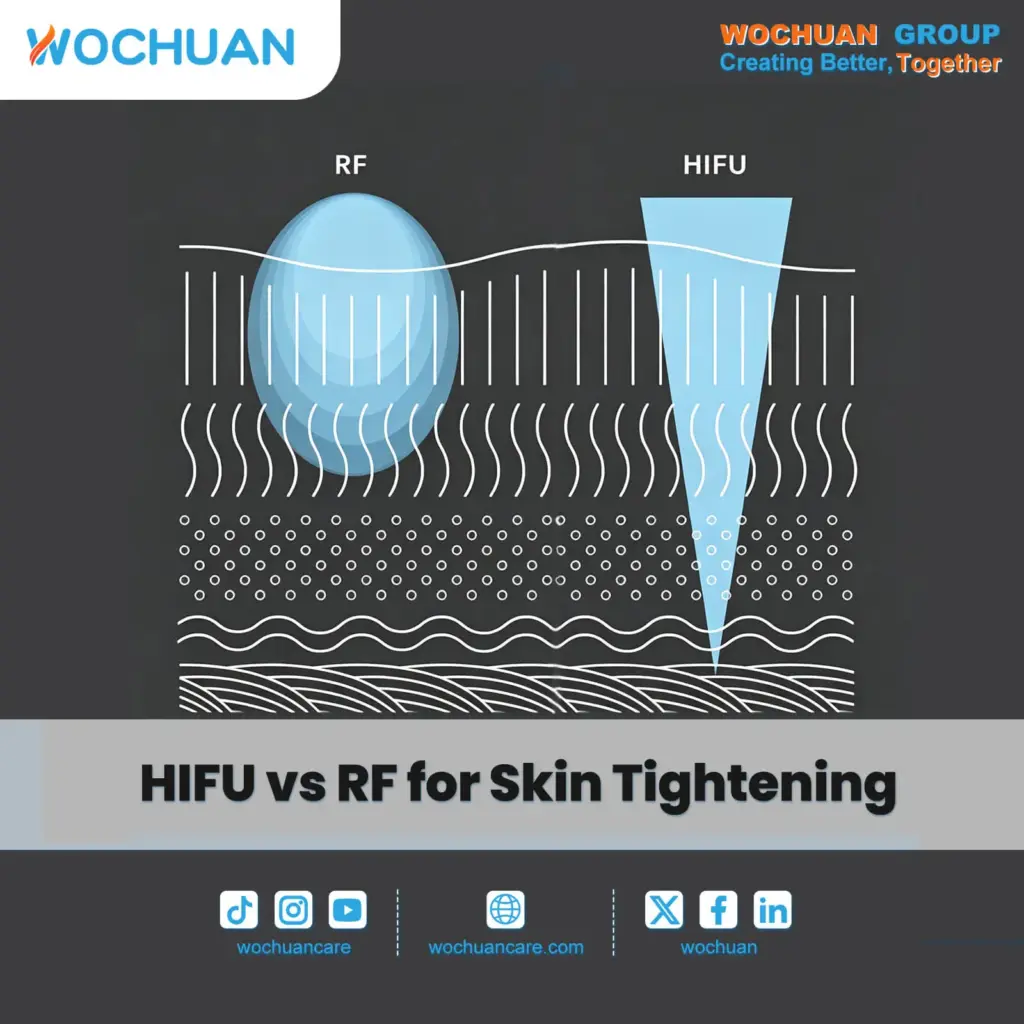
HIFU (High-Intensity Focused Ultrasound) uses focused ultrasound energy to reach deep skin layers, including the SMAS layer. It helps lift sagging skin, improve facial contours, and reduce wrinkles by stimulating collagen regeneration.
HIFU is commonly used for:
- Facial lifting
- Jawline contouring
- Neck tightening
- Deep anti-aging treatments
Results usually become visible within 2–3 months after treatment
What Is RF?
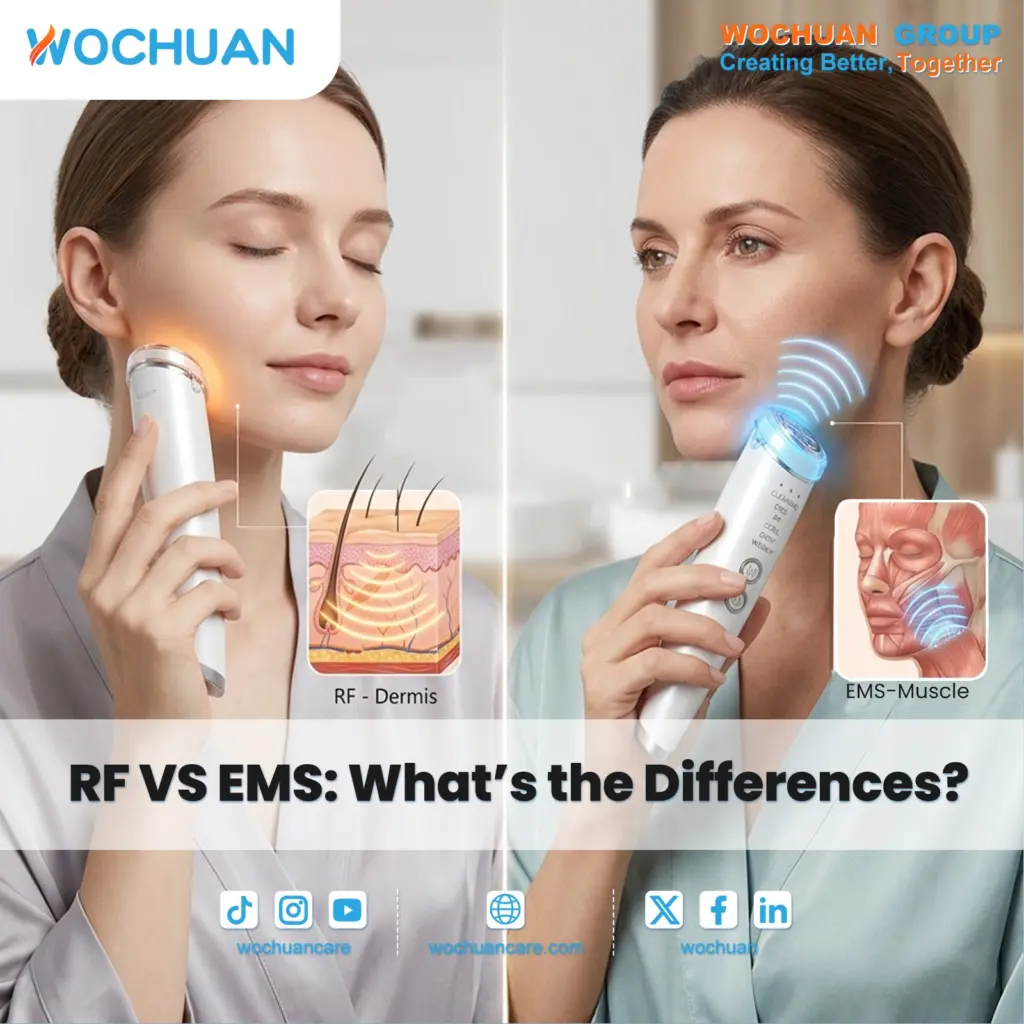
RF (Radiofréquence) technology uses controlled heat to stimulate collagen and elastin production in the dermis layer. RF treatments improve skin elasticity, texture, and firmness with minimal discomfort.
RF devices are widely used for:
- Fine line reduction
- Skin rejuvenation
- Mild skin tightening
- Daily anti-aging care
RF technology is also popular in home-use beauty devices because of its safety and comfortable treatment experience.
HIFU vs RF: Key Differences
| Fonctionnalité | HIFU | RF |
| Technologie | Focused ultrasound | Radio frequency energy |
| Treatment Depth | Deep layers (SMAS) | Couche de derme |
| Main Benefit | Levage & contouring | Rampant & rejuvenation |
| Comfort Level | Slight discomfort | Warm & comfortable |
| Results | More noticeable lifting | Gradual skin improvement |
| Mieux pour | Moderate skin sagging | Early anti-aging care |
| Typical Use | Professional treatments | Professional & home-use devices |
Quelle technologie est la meilleure?
The best choice depends on the user’s skincare goals. HIFU is ideal for deeper lifting and contouring, while RF is better for regular skin maintenance and gentle anti-aging treatments.
Aujourd'hui, many beauty brands combine HIFU and RF technologies into multifunctional devices to meet different consumer needs. As demand for at-home beauty solutions continues to rise, both technologies are expected to remain key trends in the beauty device industry.